Sloth SVG Files for Cricut
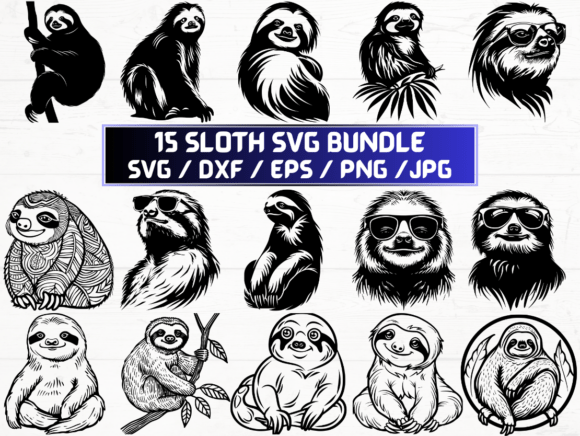
As a designer who’s stitched over 300 custom embroidery projects—from boutique baby onesies to Etsy best-selling tote bags—I opened Sloth SVG Files for Cricut expecting charm, but what stood out immediately was its quiet intentionality. This isn’t just another cartoon sloth slapped onto a vector grid. The shapes are soft-edged but precise, the posture relaxed without slumping into vagueness, and the facial expression lands somewhere between sleepy and sweet—ideal for handmade products where tone matters as much as technique.
I tested it first on a medium-weight cotton twill tote bag destined for a local nursery shop’s holiday collection. The sloth sat centered above the pocket, scaled to 3.2 inches tall. Right away, I noticed how well the negative space worked: no overcrowded limbs, no awkward gaps between ear and head, no fussy details that would vanish under satin stitch. That’s critical—not every cute SVG translates cleanly to machine embroidery design. Sloth SVG Files for Cricut avoids the trap of over-detailing; it’s simplified enough for clean stitching, but expressive enough to feel hand-drawn.
For sweatshirt embroidery, especially on midweight fleece or French terry, this design holds up beautifully. The rounded body shape flows with fabric drape, and the minimal internal line work (a gentle curve for the eye, a subtle smile) reads clearly even at 2.5 inches. I ran it as a fill-stitch base with a light satin-stitch border—no dense underlay needed, which kept the backside smooth against skin. On baby embroidery? Perfect. No sharp corners, no tiny loops or thin connectors that could snag or fray after washing. It’s inherently gentle—both in mood and construction.
That said, caution applies where precision and fabric behavior collide. On stretchy knits like jersey tees, I’d recommend stabilizing with cutaway + topping (like Sulky Tender Touch) to keep the sloth’s rounded contours from distorting during stitching. And on dark fabric? Test thread colors carefully—the original SVG’s subtle shading doesn’t carry into stitch logic, so contrast becomes your co-designer. A warm charcoal sloth on navy feels cozy; the same file in pale yellow on black risks disappearing unless you adjust density or add a subtle outline stitch.
Hoop size is another quiet factor. While the files include SVG, DXF, EPS, PNG, and JPG formats—great for craft business versatility—the actual embroidery file isn’t included outright. So before digitizing, check whether your embroidery software can reliably interpret the vectors without distortion. I’ve seen otherwise lovely SVGs generate jagged curves or collapsed paths when auto-traced, especially around the sloth’s curled tail tip or inner ear. Always test the converted embroidery file on scrap fabric first, not just the vector preview.
Where this design shines commercially is in consistency. As an Etsy seller, I’ve used Sloth SVG Files for Cricut across three product lines: embroidered tea towels (with coordinating script text), iron-on patches for kids’ backpacks, and minimalist nursery wall art (printed + framed). Because the silhouette is strong and legible at multiple scales—from 1.75" patches to 5" hoop-sized applique designs—it supports cohesive branding without needing redesigns. Customers recognize it instantly, and that builds trust: they know what “your sloth” looks like, whether it’s stitched, printed, or cut.
It’s also gift-ready by nature. Unlike trend-driven graphics that age quickly, this sloth leans into timeless calm—a quiet counterpoint to today’s visual noise. I’ve seen repeat buyers choose it for baby shower gifts, teacher appreciation totes, and even wedding weekend welcome bags (paired with eucalyptus motifs). Its warmth reads as handmade, not mass-produced—even when used digitally—and that perception lifts perceived value. A $28 embroidered pillow cover with this sloth feels intentional, not generic.
But let’s be real: Sloth SVG Files for Cricut isn’t built for ultra-fine detail work. Skip it for dense monogramming combos or intricate multi-layer applique unless you’re willing to redraw key elements. Tiny lettering added directly to the SVG? Risky—running stitch won’t hold crispness below 0.15". And on textured fabrics like bouclé or heavy linen, simplify further: drop interior lines entirely and lean into bold silhouette + satin border only.
Here’s what I do before any production run:
- Test stitch on scrap fabric matching the final garment’s weight and stretch
- Compare black-and-white mockups on light vs. dark backgrounds
- Check stitch density—especially around the face—to avoid puckering
- Verify stabilizer choice (cutaway for knits, tear-away for stable wovens)
- Review licensing terms—since this is a digital embroidery file, confirm commercial use rights if selling finished products
- Use the PNGs (300 dpi, transparent background) for printable mockups and Etsy listing visuals—they render cleanly and scale well
For crafters building a small shop product line, Sloth SVG Files for Cricut offers reliable flexibility. It works as a standalone embroidered patch, a subtle corner accent on an apron, or the hero motif on a holiday kitchen towel set. Its strength lies in restraint—not trying to be everything, but doing one thing very well: delivering approachable, stitch-friendly charm that feels earned, not engineered.
If you're evaluating Sloth SVG Files for Cricut for your next embroidery project, ask yourself: Does it support the feeling I want my customer to have? Calm? Playful? Thoughtful? Nostalgic? This design answers “yes” to all four—without shouting. And in handmade product design, that quiet confidence is rarer—and more valuable—than you’d think.