Seashell Stencil: Graphics for Coastal Crafts & Branding
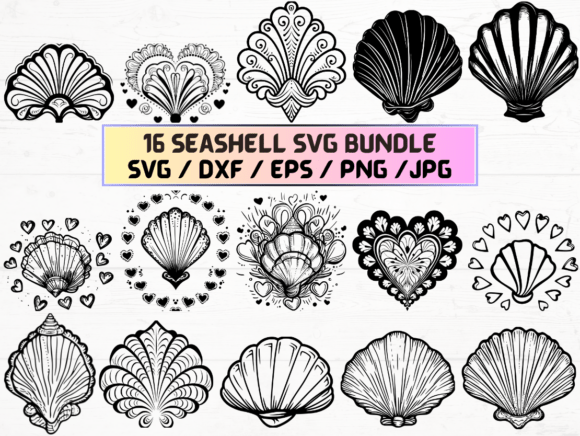
As a graphic designer who’s built visual identities for handmade businesses—from coastal Etsy shops to boutique apothecaries—I recently evaluated Seashell Stencil for a real client project: a summer launch for a small-batch sea salt and seaweed skincare line. The goal? A cohesive, tactile, sun-bleached aesthetic that feels artisanal but never kitschy. My first impression? This isn’t generic clipart. It’s a quiet, confident set of organic shapes—curved, asymmetrical, slightly weathered—with intentional negative space and subtle texture cues baked into the outlines. It leans into naturalism without sacrificing scalability or clarity.
A Mood That Anchors, Not Distracts
Seashell Stencil evokes calm, craftsmanship, and gentle nostalgia—not loud vacation energy. Its lines are clean enough for modern design, yet soft-edged enough to support a handmade business narrative. For my skincare client, it immediately elevated mood boards by grounding floral and typographic elements in something tactile and regionally resonant. Unlike over-rendered 3D shells or cartoonish icons, these stencils feel like they belong on hand-stamped packaging, linen labels, or watercolor-infused social media graphics. They whisper “coastal living,” not “beach party.”
Where It Shines in Real Client Work
In practice, Seashell Stencil performs exceptionally well across multiple touchpoints:
- Product mockups and packaging design: Placed subtly along jar labels or as a repeating border on kraft paper boxes, the SVG and EPS files scale flawlessly—no pixelation, no jagged edges. The transparent PNGs drop cleanly into layered mockup templates.
- Social media graphics and Pinterest pins: Used as corner accents or background motifs in Canva templates, the stencil adds thematic cohesion without competing with copy. Its light footprint supports strong visual hierarchy when paired with bold sans-serif headlines.
- Cricut projects and printable designs: The DXF and SVG files cut precisely on vinyl and cardstock. I tested one on a reusable tote bag mockup—clean lines, consistent stroke weight, zero registration issues.
- Brand identity systems: While not logo-ready alone, it integrates beautifully as a supporting element—think monogrammed stationery, Instagram story highlights, or sublimation design for branded merch like mugs and towels.
- Editorial and blog visuals: Paired with serif body text in editorial layouts (e.g., seasonal newsletters or blog posts about ocean conservation), the stencil adds warmth and context without overwhelming readability.
Where to Use It With Intention
This is not a one-size-fits-all graphic design asset. Its charm lies in restraint—and its limitations are just as important to note:
- Avoid tight spaces: At under 24px height, detail blurs. It’s not ideal for tiny favicon use, micro-icons, or dense UI elements.
- Beware low-contrast backgrounds: On pale creams or washed teals, some finer strokes fade. Always test on actual brand color palettes—not just white.
- Resist overuse in minimalist branding: If your client’s identity relies on stark geometry and ultra-thin typography, Seashell Stencil may soften the message too much. It thrives in warm, layered, human-centered design—not corporate austerity.
- Don’t force it into complex compositions: Crowded layouts with heavy textures or overlapping illustrations will mute its impact. Let it breathe.
Designer Notes You Can’t Skip
Before clearing Seashell Stencil for client work, I ran these checks:
- Test black-and-white output: Printed a sample label at 100% scale—no stroke loss, crisp edges preserved.
- Verify transparency: Opened PNGs in Photoshop—no fringing, fully alpha-channel clean.
- Inspect vector editability: Expanded an SVG in Illustrator—anchor points were logical, paths uncluttered, easy to recolor or adjust stroke weight.
- Compare font pairings: Works best with warm serifs (e.g., Playfair Display), friendly sans-serifs (e.g., Montserrat), and delicate scripts—not harsh display fonts or rigid monos.
- Confirm commercial license: Verified the seller grants broad commercial use—including print-on-demand, digital products, and client deliverables. No attribution required, but always double-check the license terms before final handoff.
- Preview across formats: Checked JPGs for compression artifacts (none found), EPS for legacy compatibility (solid), and DXF for Cricut Design Space readiness (flawless import).
Why It Earns a Spot in My Creative Toolkit
For designers serving small business branding, Seashell Stencil bridges aesthetics and utility. It’s not just another clipart download—it’s a design bundle engineered for real-world flexibility. Whether you’re building a full brand identity, crafting a limited-edition product mockup, designing Instagram carousel slides, or prepping files for a local craft fair vendor, this set delivers consistent quality across formats. It strengthens emotional appeal for audiences seeking authenticity, reinforces visual trust through thoughtful execution, and quietly elevates professionalism—even in DIY contexts like Canva templates or Cricut projects.
Most importantly, it saves time without sacrificing intention. In client work where every visual decision must align with voice, values, and audience expectations, having a reliable, mood-aligned graphic design asset like Seashell Stencil means less hunting, more refining—and more confidence in the final result.