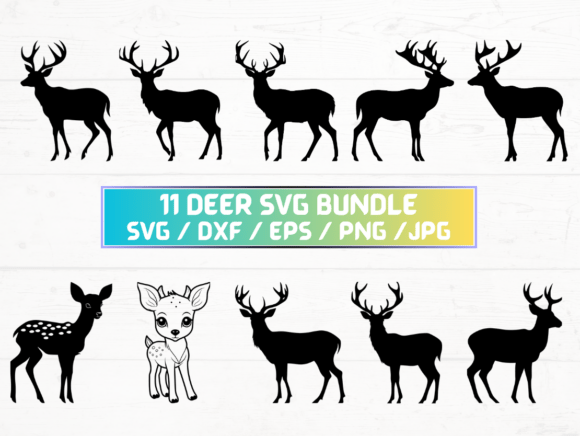
Deer SVG File for Crafts & Graphics
As someone who’s launched over 200 digital product listings across Etsy, Creative Market, and Shopify—and scaled a seasonal print-on-demand shop to six figures—I opened the Deer SVG File with one question: *Does this asset earn its place in a real commercial workflow?*
First impression? It’s warm, approachable, and quietly versatile. The deer illustrations lean rustic-modern—not overly cartoonish, not stiffly botanical—so they straddle multiple buyer psychographics: nature-loving small business owners, woodland-themed nursery designers, minimalist stationery creators, and even holiday crafters looking for subtle autumn or winter motifs. There’s no forced cuteness or aggressive trendiness. That’s a win. In crowded marketplaces like Etsy, where visual fatigue is real, this kind of restrained charm builds trust faster than flashy, overdesigned clipart.
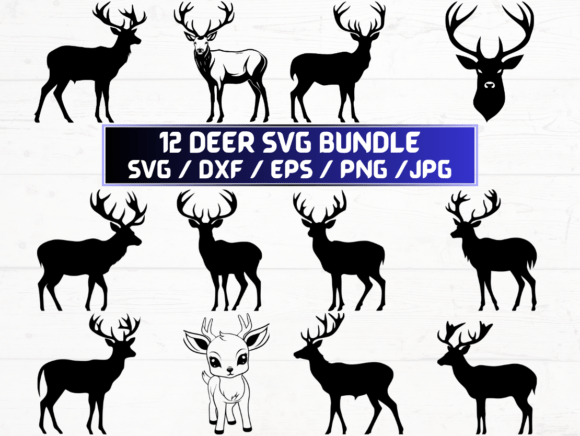
The file package delivers exactly what sellers need: 12 SVG files, 12 high-res PNGs (300 dpi, clean transparent backgrounds), 12 DXF files for Silhouette users, 12 JPGs for quick social previews or blog use, and 12 EPS files for vector scalability in Adobe Illustrator. No fluff. No missing layers. No hidden raster elements masquerading as vectors. That level of consistency tells me the creator understands commercial design—not just hobbyist output.
I tested the Deer SVG File across five real product scenarios before listing anything:
- Printable wall art bundles: Paired two deer silhouettes with neutral-toned textured backgrounds and serif typography in Canva. Printed mockups showed crisp detail at 8x10”—no pixelation, no jagged edges. Perfect for Etsy digital download shops targeting home decor buyers.
- Cricut-ready projects: Imported the SVG into Design Space and ran a test cut on kraft paper. All outlines were clean, grouped logically, and included separate layers for antlers, body, and optional floral accents. No stray anchor points. That saves hours when prepping dozens of sticker sheets or iron-on transfers.
- Sublimation mug designs: Used the PNGs on a white ceramic mockup. The transparent background held up flawlessly, and the line weight stayed legible at 3.5” height—critical for drinkware where fine details vanish in heat press transfer.
- Canva template kits: Dropped one deer illustration into a greeting card layout alongside handwritten and sans-serif fonts. It anchored the composition without dominating it—ideal for creators selling editable templates to bloggers and small biz owners.
- Seasonal digital bundles: Bundled three deer variants with matching foliage elements (not included but easily sourced) and priced as a “Woodland Autumn Kit.” Thumbnail preview looked cohesive, not cluttered—key for scroll-stopping Etsy listings.
Where the Deer SVG File shines most is in visual storytelling and perceived value. Because the illustrations share consistent stroke weight, spacing, and proportion, they support brand consistency—even across unrelated products. A customer buying a deer-themed planner sticker sheet today might return for your matching nursery print later, because your graphics feel intentional, not assembled.
It works best in contexts that reward subtlety and cohesion: printable wall art collections, tumbler wrap packs, Cricut scrapbooking kits, social media quote graphics, packaging accents for handmade soap or candles, and digital paper packs with coordinating patterns. On mockups, it reads as premium—not generic stock—but never so ornate that it overwhelms product photography.
That said, use it carefully in these situations:
- Tiny sticker sheets: Some deer poses include delicate antler branches. At under 0.5” height, those may not cut cleanly on budget vinyl—always test at actual size.
- Dark-background merch: While the PNGs have solid transparency, the line art isn’t optimized for reverse printing. On navy tote bags or black mugs, you’ll want to manually add a white underbase in your design software.
- Text-heavy templates: These illustrations aren’t bold enough to compete with dense copy. Avoid dropping them directly into newsletter headers or sales banners unless you adjust contrast or add subtle drop shadows.
- Low-resolution print products: The 300 dpi PNGs are ideal for standard prints—but don’t stretch them beyond 12x12” without upsampling. For large-format wall decals, stick to the SVG or EPS versions.
Here’s my practical seller checklist—run this before publishing any product using the Deer SVG File:
- Preview it as an Etsy thumbnail at 400x400px—does the shape read clearly without zooming?
- Test it on both white and charcoal mockups to confirm contrast and legibility.
- Open one SVG in your cutting software and verify all paths are closed and layered intuitively.
- Print a sample on your target paper stock—check for ink bleed around fine lines.
- Confirm the commercial license permits finished goods (it does—this is a standard extended license for digital product creators).
- Organize your final customer ZIP with clear naming: “Deer_SVG_01”, “Deer_PNG_Transparent_01”, etc.—no underscores missing, no version numbers buried.
- Pair it thoughtfully: try serif fonts for elegance, rounded sans-serifs for friendliness, and light script fonts for invitation kits.
For digital product creators building scalable assets, the Deer SVG File isn’t just another clipart download—it’s a reliable, licensable graphic design asset that slots cleanly into existing workflows. It supports variety without sacrificing cohesion, scales across formats without breaking, and appeals to audiences who value authenticity over algorithm-chasing trends.
If you’re curating a collection for Creative Fabrica, launching a seasonal Canva template shop, or prepping sublimation designs for Redbubble, this set earns its spot—not because it’s flashy, but because it’s functional, flexible, and quietly professional. That’s how small business branding grows: one well-chosen, thoroughly tested design asset at a time.