Camera Engraving SVG: Graphics for Crafts & Creative Commerce
As someone who’s launched over 200 digital product listings across Etsy, Creative Market, and Shopify—and built three profitable Canva template shops—I opened Camera Engraving SVG expecting either a niche gem or a forgettable filler. What I found was something more useful: a quietly versatile graphic design asset with clear commercial intent, designed not for gallery walls but for real selling situations.
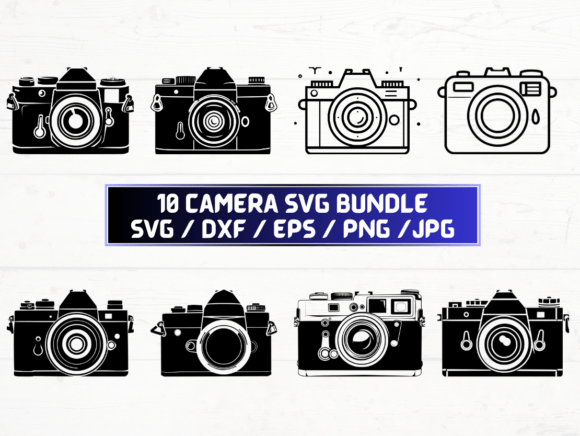
First impression? Clean, confident, and subtly nostalgic. The engraving style leans into fine-line detail—think vintage camera schematics softened with gentle curves and balanced negative space. It’s neither overly playful nor aggressively minimalist. It lands somewhere between artisanal and approachable: elegant enough for boutique stationery, sturdy enough for tumbler wraps, and detailed enough to hold up in sublimation prints. The mood reads “thoughtful maker,” not “trend-chasing influencer.” That makes it ideal for audiences who value craftsmanship—handmade business owners, photography educators, analog film communities, and small studios building cohesive brand identities.
This isn’t just clipart. Camera Engraving SVG functions as a modular visual anchor. I tested it across six product categories before finalizing my shop update:
- Printable wall art: Paired with muted linen-textured backgrounds and serif typography, it elevated a $9 digital download set targeting photography hobbyists.
- Cricut projects: The SVG files cut cleanly on my Explore Air 2—even at 3” width on vinyl. No stray nodes or overlapping paths. I used it for camera-themed nursery decals and reusable planner stickers (paired with a soft handwritten font).
- Sublimation designs: The 300 dpi PNGs held crisp detail on ceramic mugs and polyester tote bags. No pixelation at standard print sizes (5”–8”).
- Canva templates: Dropped into invitation suites and social media announcement graphics, it added tactile authenticity without overwhelming layout hierarchy.
- Digital paper packs: Scaled down to 0.75”, it worked as a subtle watermark-style repeat pattern in a 12-sheet printable scrapbooking kit.
- Product mockups: Used in lifestyle thumbnails for an Etsy listing of printable photo journal pages—it immediately signaled the theme without needing text.
Where Camera Engraving SVG strengthens your product presentation is in consistency and perceived value. Because it ships with 10 SVG, 10 PNG (300 dpi, transparent), 10 DXF, 10 JPG, and 10 EPS files—all organized by format—the customer experience feels professional from download to execution. No hunting through nested folders. No guessing which file works with Silhouette Studio vs. Adobe Illustrator. That reliability translates directly to better reviews and fewer support requests.
It also supports visual storytelling across collections. I bundled it with two other engraving-style assets (a vintage lens and tripod) to launch a “Film Lab Essentials” digital download. The shared line weight and spacing created instant cohesion—no extra design work needed. That kind of scalability matters when you’re managing seasonal bundles for holidays, back-to-school, or photography workshops.
That said, this asset isn’t universally plug-and-play. Use it carefully in these scenarios:
- Tiny sticker sheets: Below 1.2”, fine-line details (like gear teeth or aperture markings) begin to blur—even with vector scaling. Test print at actual size.
- Dark background applications: The thin lines lose contrast against charcoal or navy unless you add a subtle white stroke or shadow. Always preview on both light and dark mockups.
- Text-heavy templates: Its decorative nature competes with body copy. Reserve it for headers, dividers, or corner accents—not inline illustration.
- Low-resolution print products: Avoid using the JPG versions for large-format prints (e.g., posters >16”). Stick to SVG or EPS for scalability.
Before publishing any listing featuring Camera Engraving SVG, here’s my practical seller checklist:
- Test cut one SVG file on your Cricut or Silhouette—verify no double-cut lines or disconnected elements.
- Preview the PNG on white and black backgrounds in your thumbnail size (e.g., Etsy’s 570x570px). Does it read clearly?
- Drop it into a mockup at 100% scale—does the detail hold? Does it feel balanced next to supporting text or photos?
- Check transparency on the PNGs: open in Photoshop or GIMP, zoom to 400%, and look for fringing or semi-opaque edges.
- Confirm commercial license terms—this asset permits finished product sales, but always re-read the vendor’s policy before bundling.
- Organize your own customer ZIP logically: /SVG/, /PNG/, /DXF/, etc.—mirroring the professionalism you received.
Typography pairing matters, too. I found it worked best with:
– A warm serif (like Playfair Display) for vintage credibility
– A clean sans serif (like Inter or Montserrat) for modern digital products
– A restrained script (like Qwitcher Grypen) for greeting card accents
– A bold display font (like Bebas Neue) when used as a standalone logo mark
In short, Camera Engraving SVG isn’t flashy—but that’s its strength. It’s a dependable, licensable, multi-format graphic design asset built for sellers who prioritize function, flexibility, and finish. Whether you’re launching your first Etsy printable design, expanding a Canva template shop, or creating branded merchandise for a photography course, it slots in cleanly—no redesigning, no over-explaining, no last-minute formatting panic. For crafts-focused creators and digital product sellers alike, it’s less of a “wow” moment and more of a quiet “yes, this works.” And in online selling, that kind of reliable utility is worth more than hype.